Rons Primitive Skills

Custom Search

Search This Blog

Showing posts with label preparedness resources. Show all posts

Wednesday, January 15, 2014

Chinese water chestnuts propagation

I received a package from a very decent person here in Florida. It contained 10 corms of the Chinese water chestnut, Eleocharis dulcis. It will grow quite well here in Florida and I am zone 8a/8b depending on the weather. I am rather enjoying all the exotic (to me, anyway) plants, both native and cultivated, here in sunny Florida. My fiance, Annie, is an ardent Florida gardener and has taught me a lot about southern gardening which is completely different from anything I have ever experienced up north or out west. Here there is no "end" to the growing season as far as gardens go. The only problem we have had was a few nights of frost so far. We have radishes, carrots, and beets in the ground and a very healthy stock of tomatoes and peppers in trays getting ready for transplanting. We use only heirloom and non GMO, non hybrid organic seeds. These first photos show how I planted the water chestnuts in a temporary container that I bring in every night. I will transplant them to a kiddie wading pool after the last frost passes. If you are interested in these delicious plants do a search for Chinese water chestnuts and you'll see they are not hard at all to propagate. I would highly encourage anyone with an interest in exotic plants and southern gardening to go to http://www.floridasurvivalgardening.com/ This is a great site and has tons of interesting information. David is an expert on southern gardening.

The corms-some are sprouting already.

Another shot of the corms on our planting table.

The dirt-a mix of sandy loam and a bit of the local pipe clay.

Here's how much dirt I put in the bucket. Its a 2 1/2 gallon bucket.

Here are the corms before covering.

A closeup of the uncovered corms. I will leave the sprouts exposed above the surface of the dirt.

I use this specially modified bucket to water things that need the least disturbance to the soil. Its also very handy for draining wet potting soil.

Here's the bucket and contents before water is added.

We have several containers on the property to collect rain water. In the summer these can fast become mosquito heaven so we keep them covered.

Filling the watering bucket.

Adding the water to the soil with corms.


This shows the soil with about 6 inches of water over the soil.

The complete project-setting in the sun with our seedlings on the starter tray racks.

This and the next two photos are shots of our starter trays with very happy seedlings getting acclimated.

Peppers, cabbage and tomatoes.

The racks-recycled shelving units from a retailer long gone. The white ones are adjustable for shelf distance. This is a southern exposure and gets a good dose of sunshine all day.

Thursday, December 5, 2013

Florida-Busy Making Preps and Life in General

Well, I made it through the hot and humid Florida summer. This has been a typical subtropical winter with highs being in the hi 70's today. Water is NOT a problem here! There is so much of it coming down. We had one day where there was a rainfall of 4 inches in a little over 10 hours. With the right storage system a person could store a lot of water for the garden. Speaking of gardens, we have our winter crops in and new seeds are under the lights right this minute. I have been checking out the local fauna & flora. The variety of insects is incredible, especially the spiders. Of course there is the Florida state bird, the mosquito. I hate those things with a passion but I have seen a few of the local "insect repellent" plants such as dog fennel and beauty berry. I tried beauty berry leaves this summer and by darn, it works! As a plus the berries are edible and can be used for making jelly and have medicinal properties. We, my fiance Annie & I, are selling some local natural items in our eBay store as well as the usual stuff. Look on my eBay link at the top right column to see what we have if you're interested. This economy is getting very rough and we are barely making it but we work hard and by the Good Lords blessings we do OK. I am doing research and some things with yaupon holly, Ilex vomitoria. The famous "black drink" was made by the local Native Americans from it, and I plan on seeing if selling the leaves for tea is feasible. The yaupon has a caffeine content that is less than coffee or tea, but enough to satisfy any craving for caffeine. "Dry, unprocessed yaupon leaves contain between .65 percent and .85 percent caffeine by weight. Coffee beans are about 1.1 percent caffeine by weight and tea leaves about 3.5 percent caffeine," according to a University of Florida article. As a plus they are rich in certain vitamins and antioxidants. I can reach out the bedroom window and grab a handful of yaupon leaves, its that abundant down here. Kind of like sage brush out in good ole' Idaho. Worth a web search if you are interested. It was used in the 1800's and during the Civil War as a coffee and tea substitute and unlike some other substitutes, it stayed around for a while until coffee became more plentiful and cheaper. I've read where birds will eat the berries but only as a last ditch effort in late winter. They must be considered as a "starvation food" among our feathered friends. Also, the wood is very nice and has been used for turnings, inlay and carvings. I removed the biggest yaupon I have ever seen from our goose pen. It was 20+ feet tall and about 6 or more inches in diameter. I am cutting it into 3 foot sections and sealing the ends. We have an aviary that's not in use so I'll stash it in there till its dry enough to use and sell. I don't know how well it does as a green wood for carving and I've read that the holly's have a nasty habit of cracking and checking if it drys too fast. Here are some shots of the local yaupon bush's. I'll be posting more interesting stuff in the near future as time permits. Thanks everyone and enjoy the holidays!


Monday, June 17, 2013

SAS Urban Survival Handbook by John "Lofty" Wiseman


I just received a copy of this book to review. Its name is "SAS Urban Survival Handbook" By John "Lofty" Wiseman who also wrote the immensely popular SAS Survival Handbook. My edition is the 2013 copy. It states on the cover "how to protect yourself against terrorism, natural disasters, fires, home invasions, and everyday health and safety hazards". So, its not just a "doomsday" type of book but one geared towards everyday, real world possibilities. It is written by a European, namely Great Britain, and it has some things that pertain to Europe but not the USA (in most cases-but, if you live in some anti-gun states you are SOL). The book is a paperback, 627 pages, and measures  8 1/4" by 5 1/4". Just right for tossing into the glove compartment or BOB. Amazon has it (there's even a Kindle edition): SAS Urban Survival Handbook

Here's a breakdown of the contents:
1. Essentials - Be a Survivor, Body Matters, Stress & City Survival kit.

Lots of good stuff here. The city survival kit is very simple to put together and is a must have in my opinion if you live in the city., especially a sizable one.

2. Safety First - Safe as Houses?, Electricity, Gas, Liquid Fuel, Solid Fuel, Water, Common Accidents, Room Check, Leaving the House, & Pets

This covers all the basic precautions associated with the above topics. Some is geared towards European houses but its easy enough to substitute American design such as electricity and plugs. When I lived in Berlin, Germany everything was 220 volt and the tongues on the plugs were round instead of spade shaped like their American counterparts. Also, if you wanted to run American made appliances you had to buy and use a step down transformer (220 volt to 120 volt)with the spade shaped socket holes. Most of us just bought German and didn't bother with the transformers. Lots of good stuff in this chapter and its geared for everyday life, not just SHTF situations.

3. DIY/Craft Hazards - Using Tools, Basic Tools, Power Tools, Hire Tools (rentals), Paint, Crafts, Ladders, Protective Clothing

This is something I haven't seen presented in any survival book. It covers the importance of safety around hand and power tools. Each year so many folks go to the emergency room because they didn't take the normal precautions with tools. There is a lot of info on how to properly use tools as well. Good material here, "Lofty"!

4. Poisons - Chemical Hazards, Alcohol, Types of Hazard, Safe Storage, Acute Poisoning, Chronic Poisoning, Kitchen/Living Areas, Bathroom, The Medicine Cupboard, Prescribed Medicines, Garage/Shed, Pesticides

Here's a lot of very good information on a topic that most folks simply fail to realize the risks of using and having in their homes. There is a very nice colored section on poisonous plants and mushrooms. Most of the plants are not wild species but ones a person may have planted for ornamental purposes. Its amazing how dangerous some garden plants can be due to their seeds, leaves, etc. that aren't used for food.

5. Fire - Fire Facts, Equipment, Drills, Fire!, Escape!

This little chapter has a lot of really important info. As it states at the beginning, fire isn't the main killer. Smoke and poisonous fumes are what do you in. Great advice on planning for, fighting and living through a fire disaster at home or away.

6. Security - Safe & Secure, Home Security, Security at Work, Vehicles

This is a topic that is, sadly, so timely. With all these crazy people shooting up schools, workplaces, etc. and criminals given just about free reign due to asinine laws (read GUN CONTROL!) and insane litigation this is an important chapter. In Europe and elsewhere, you are not allowed firearms so must resort to other means. Fortunately, for now and for most of us, we have the freedom to own guns. Buy and carry a good handgun. Just my opinion.

7. Work & Play - The Workplace, Leisure, Sport

This chapter deals with the risks involved in such activities. Its surprising how many things are a danger that I never thought of. Sports, of course, is one of the most injury prone activity there is. Good stuff!

8. In Transit - On the Move, Public Transport, Lifts (elevators)/Escalators, Travelling Abroad

There's a load of good common sense info in this chapter. Some surprising ideas are presented, especially the section on overseas travel.

9. Self-Defence (spelled defense in USA) - The Law, Being a Witness, Under Attack, High-Risk Groups, Self-Defence, Into Action, Animal Attack

A lot of this chapter pertains to Europe as far as the law is concerned. But, still, the information is food for thought and you should be familiar with the laws concerning self-defense where you live.
There is a good section on self-defense and another on dangerous animals such as poisonous snakes and other animals and insects. Vectors are included in this chapter. The section on signs is interesting. The meaning is pretty much the same as the signs in this country so I would imagine there is a worldwide standard.

10. Terrorism - Terrorist Threat, Bombs, Hijack/Kidnap, Under Fire, Risk Limitation, Bullet/Blastproofing

This is a timely topic. There is a lot of very good information in this chapter.

11. Disasters - Natural Disasters, Earthquake, Volcano, Hurricane, Tornado, Flood, Lightning, Drought, The Big Freeze

This is pretty much self explanatory. Important information for recognizing and dealing with these threats.

12. Health - Take Control, Childhood Diseases, Serious Diseases/Disorders, Genetic Disorders, Respiratory Problems, Eating Disorder, Food Hygiene,  Tropical Diseases, STD's, Parasites, Pets & Your Health, Bites/Stings, Substance Abuse, Emergencies, Save a Life!

This is a very good chapter on health and dealing with sickness or injury. On most diseases/disorders it has symptoms and action to take. It  gives a brief but thorough description of the maladies.

The book doesn't have an index but the way the chapters are arranged makes it easy to find whatever subject you are looking for. I am impressed with this book and I can tell a lot of work went into it. I give it a 10. Good job, John.

Thursday, November 3, 2011

Polar Pure water treatment-Why the sudden price jump?

Has anyone noticed the price jump with Polar Pure Iodine crystals? The bottles used to be less than $20 and now I see they have suddenly jumped to $40 plus. Crazy. Maybe they are in short supply of Iodine? I don't think so. You can still buy it cheap on eBay. One ounce for $15. I wonder whats up?

Monday, July 18, 2011

Earthquakes and monitoring them

I am very interested in earthquakes since I live in an earthquake prone state. I have a program on my computer called 3D Earthquake. It automatically scans and updates all the earthquakes all over the world. There is a free edition but the $20 edition has way more options and well worth it if you are concerned. Here's a link to their site: 3D Earthquake

I have been prepared for quakes since I moved here. Even though I'm prepared, I could still loose all my preps depending on the magnitude of the quake. If there is major structural damage my preps may be trapped under a ton of debris. There are chances the preps in my car could be destroyed by falling trees. Its just a risk I have to live with. Its part of the reason that knowing primitive skills will come in very handy. Even if all is lost I feel I have a very good chance of making it.

Thursday, July 14, 2011

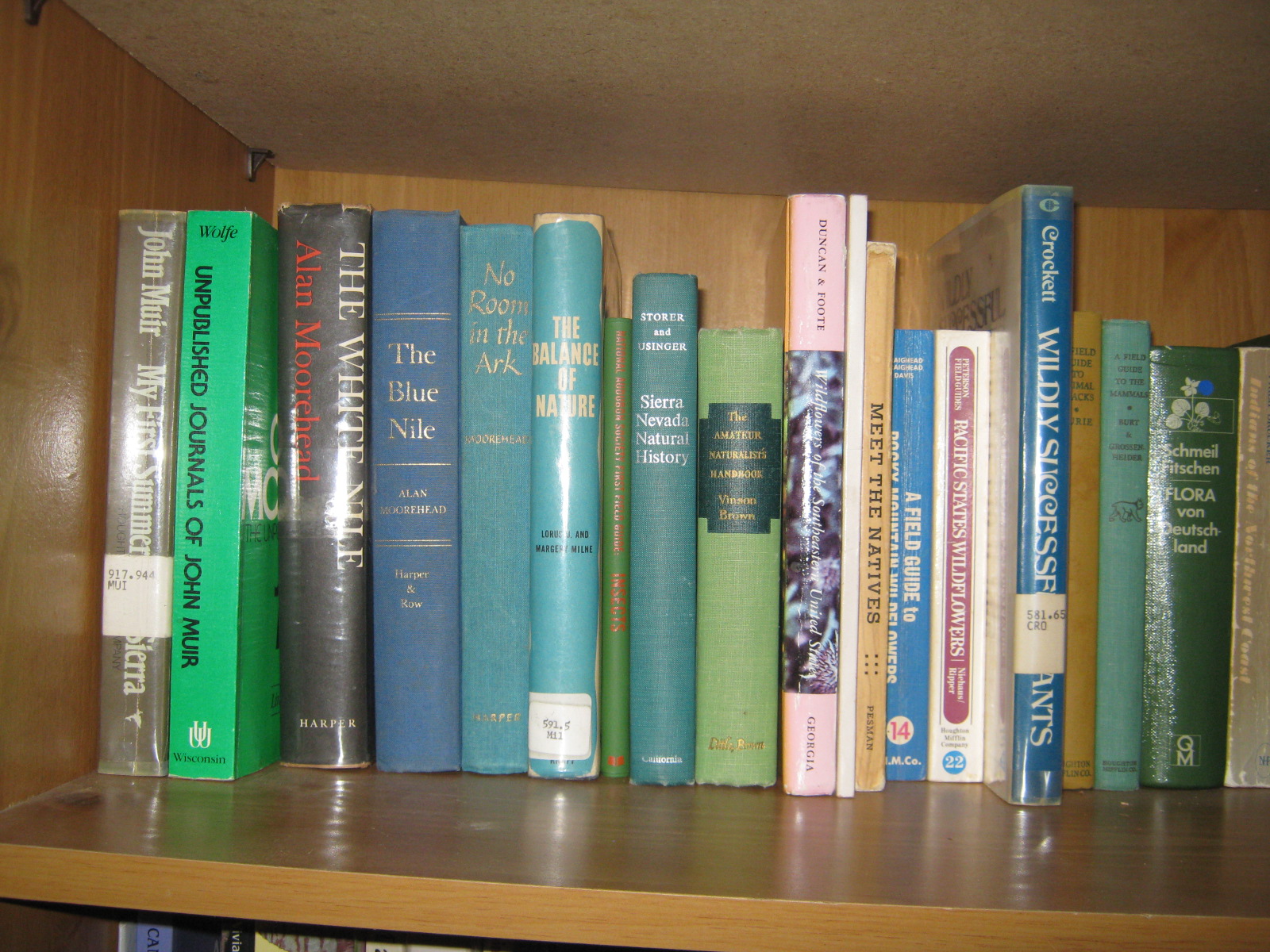
A Good Library

 A good library is important if you seek knowledge about primitive skills, survival, and preparedness. This is part of my library. This doesn't show the two cases of downloaded e-books and files on DVD's. Also missing are all my Bible & related books and books on primitive skills, some tree and plant books and a bunch of military manuals.


Sunday, August 8, 2010

More Costco preparedness goodies


These lights were $16.99 for the pack. When I first saw them I thought they were Surefire, which cost way too much and use special batteries. These use 3 AAA alkaline batteries. These area great deal for the prepper. Surprisingly, Costco has a lot of preparedness supplies such as long term storage food (at their website) and I found box's of Mountain House freeze dried food at the store. Maybe folks are getting more concerned and prepping? I hope so. I really do.

Saturday, August 29, 2009

Knowledge is power

Heres a linkto a great portal that has tons of relevant information: http://www.drum-runners.com/ You should bookmark this as well as the other links I have posted to the right in the links column.

Friday, August 28, 2009

Its nearly harvest time

Here in the central valley of California its getting close to harvest time. The fruit trees have been at peak for a few weeks now. The nut trees are up next and the veggies are in full bore and lots more to come. At the local farm market you can pick up anything from green beans to fresh herbs. All of these can be put up some way. I prefer to freeze a few things like peppers, eggplant, green beans and a few others. I just don't have the room to store canned (as in mason jars) goods and I don't have the equipment anymore. You have to give things up when you live in a small apartment. Another way I put food up is by drying. You can get a sizable larder of dried food in no time!
The reason I'm saying this is now that the food is available for fairly cheap, its a good time to stock up. We don't know what next year will be like and with this crazy government we presently have who knows whats next.

Friday, June 26, 2009

Two new links of note

I've recently added two new links. One is Food Storage Depot http://foodstoragedepot.com/
and Preparedness Pantry http://preparednesspantry.blogspot.com/. These are good sources for buying high quality long term storage foods in quantity. I am a firm believer in being prepared and have a long term food storage program. You never know when disaster will strike so do as the Boy Scouts and "Be Prepared!".


Also, if anyone finds that any of my posted links is broken/obsolete, please email or make a comment and I'll do my best to repair/replace it. Thanks!!