Rons Primitive Skills

Custom Search

Search This Blog

Showing posts with label nature. Show all posts

Monday, December 9, 2013

Critters continued

Here are some more photo's of the local fauna. Enjoy and please don't be afraid to ask questions. Thanks everyone!

eastern ringneck snake Diadophis punctatus
I found this handsome fellow under an old bucket yesterday. They are very docile and quite harmless to humans. They are the only species within their genus and have rear fangs and are poisonous. However the chance of being bitten is so darn remote due to the tiny size of the mouth. They bite their prey (worms, slugs, frogs, salamander and lizards as well as juvenile snakes of other species) and constrict. The venom eventually kills or incapacitates its meal. The venom is not produced in regular poison glands like a rattlesnake but in tiny organs called Duvernoy's gland which is located directly behind its eye. They rarely even attempt to bite a human and this would seem to prove that their poison is used for feeding rather than defensive purposes. They are fairly common, but being nocturnal, they are seldom seen. Special thanks to Annie for doing the photography and for sharing my love for all things natural.

American gree treefrog Hylidae cinerea

American gree treefrog Hylidae cinerea
 Another common resident here at the property. At night they like to climb the office window where Annie and I work and ambush the light loving insects. Cute little critters, aren't they? By the way, they are the state amphibian for Georgia and Louisiana.

Here's a full grown one-about 2 1/2 inches long perched on an elephant ear stem.
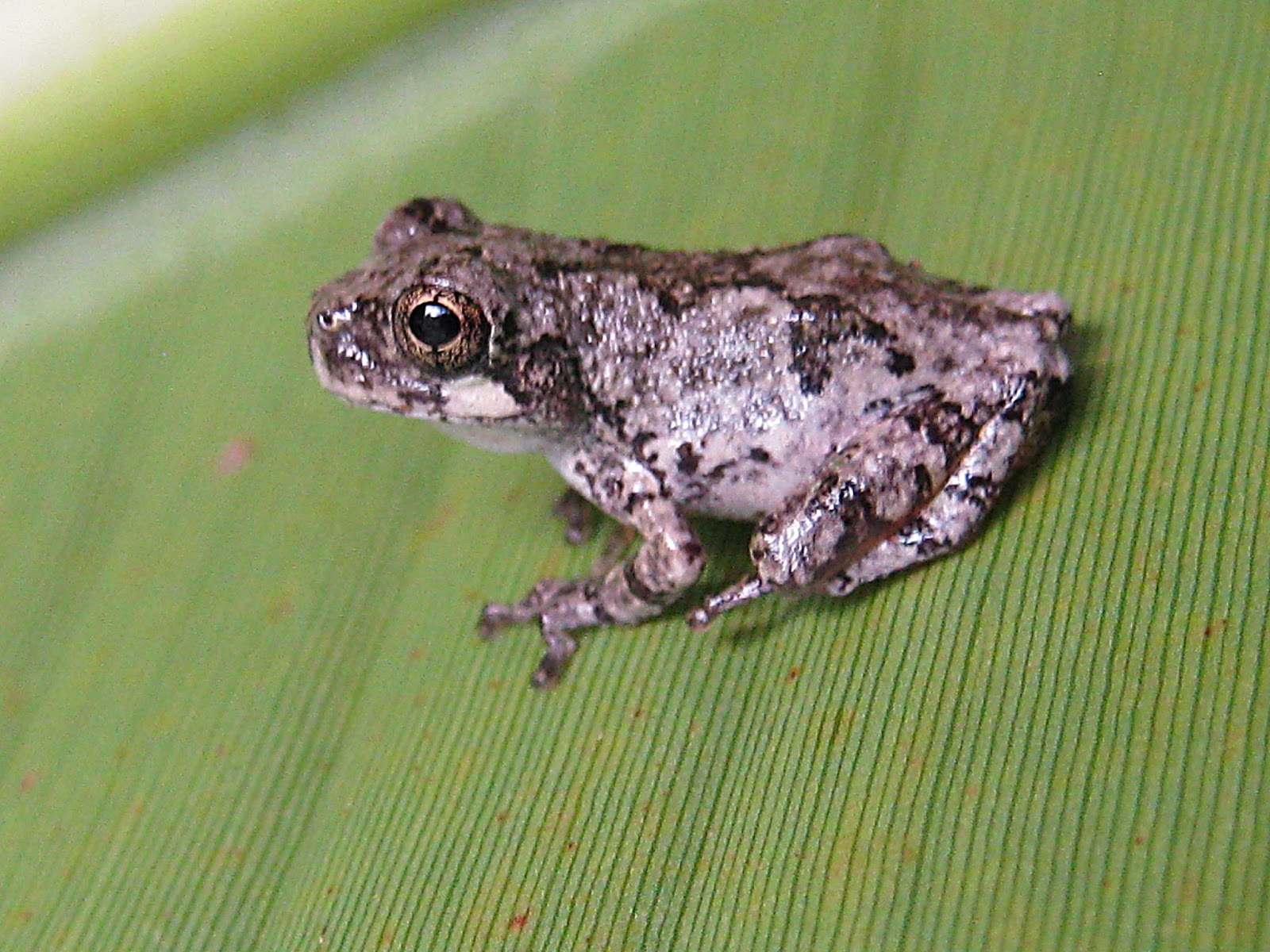
Copes Gray Treefrog Hyla chrysoscelis

Copes Gray Treefrog Hyla chrysoscelis
 Anyone see the skull and crossbones on his back? That design would be more appropriate to a poison arrow frog from Central America.

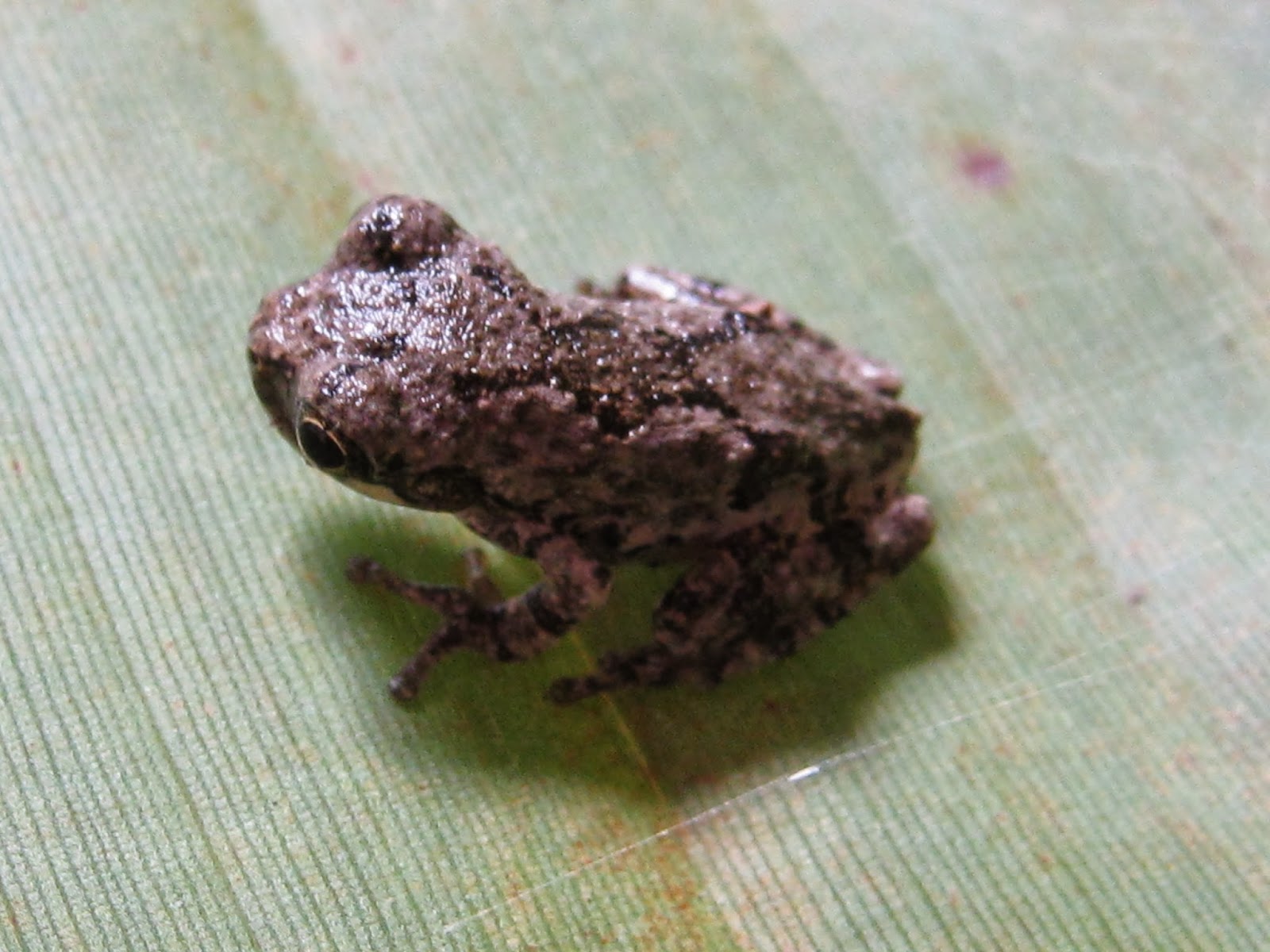
Copes Gray Treefrog Hyla chrysoscelis

This handsome little guy is usually found hiding during the day under debris and comes out at night to eat. No two Copes have the same pattern. Each is individual and as you can see in the last photo it is very good camouflage.

Again, due to unauthorized use, I must repeat, all subject matter and photo's are my personal work and are in my copyright. Please don't republish them without my permission. Thanks! More to come so stay tuned!

Saturday, December 7, 2013

Some Florida critters I've met

I live in the area of Florida called the Big Bend which is where the pan handle coast curves northward on its west to east swing. Or east to west if you really care. Take a look at a map of Florida and you'll see. The area is sub tropical and unlike south Florida we do have a winter, though you wouldn't think so with yesterdays temperature being 80. This climate is highly conducive to a preponderance of animal species or in other words there are a lot of critters around! I remember seeing way too many snakes when I took survival class at Eglin AFB up near Crestview a long time ago. I've only seen two snake's here on the farm since I've been here-a juvenile black snake with a BIG attitude and a very docile corn snake. The only alligators I've seen were at the St. Marks River wildlife reserve. Of course the famous little anole or so called chameleon is everywhere. One day we caught around 25 just on the buildings here at the farm. They work on the local bugs so we let them all go after our little bit of fun.

Spiders are another story. I have seen dozens of different species here on the farm and it amazes me that I have seen NO black widows around since they are supposed to be so prevalent. I saw way too many up in Idaho but not a single one here. Yet. There are some huge orb weavers here such as the golden orb weaver or locally called the banana spider due to the shape of its abdomen. I read where they bite but not sure how poisonous. They build the most fantastic webs! Another one new to me is the orchard spider with its fluorescent looking orange and green markings. There is a big, beautiful lynx spider living in the banana trees. I see him buy the porch light some mornings taking care of any lingering insects. Another locally named spider is called the crab spider. I'm not too familiar with a lot of spider names but this name seems appropriate.

Every morning we see signs of armadillo digging during the night. They make a conical hole in the ground in their search for insects. From what I've read the eat earthworms and grubs as well as other critters. The local opossums are healthy and thriving. The neighbor has live trapped a few and we take them out in the way-back and release them. Ugly critters.

Here are some photos to give you an idea of whats going on here in sunny Florida. Please remember that these photo's are under my copyright. Feel free to download or "save image as" for your own personal use as long as you don't publish them. Enjoy!


                                                                           Alligators


                                                                         Anole's


                                                                          Spiders

spinybacked orbweaver Gasteracantha cancriformis

spinybacked orbweaver Gasteracantha cancriformis
              
daring jumping spider Phidippus audax

daring jumping spider Phidippus audax
orbweaver Araneidae

orbweaver Araneidae

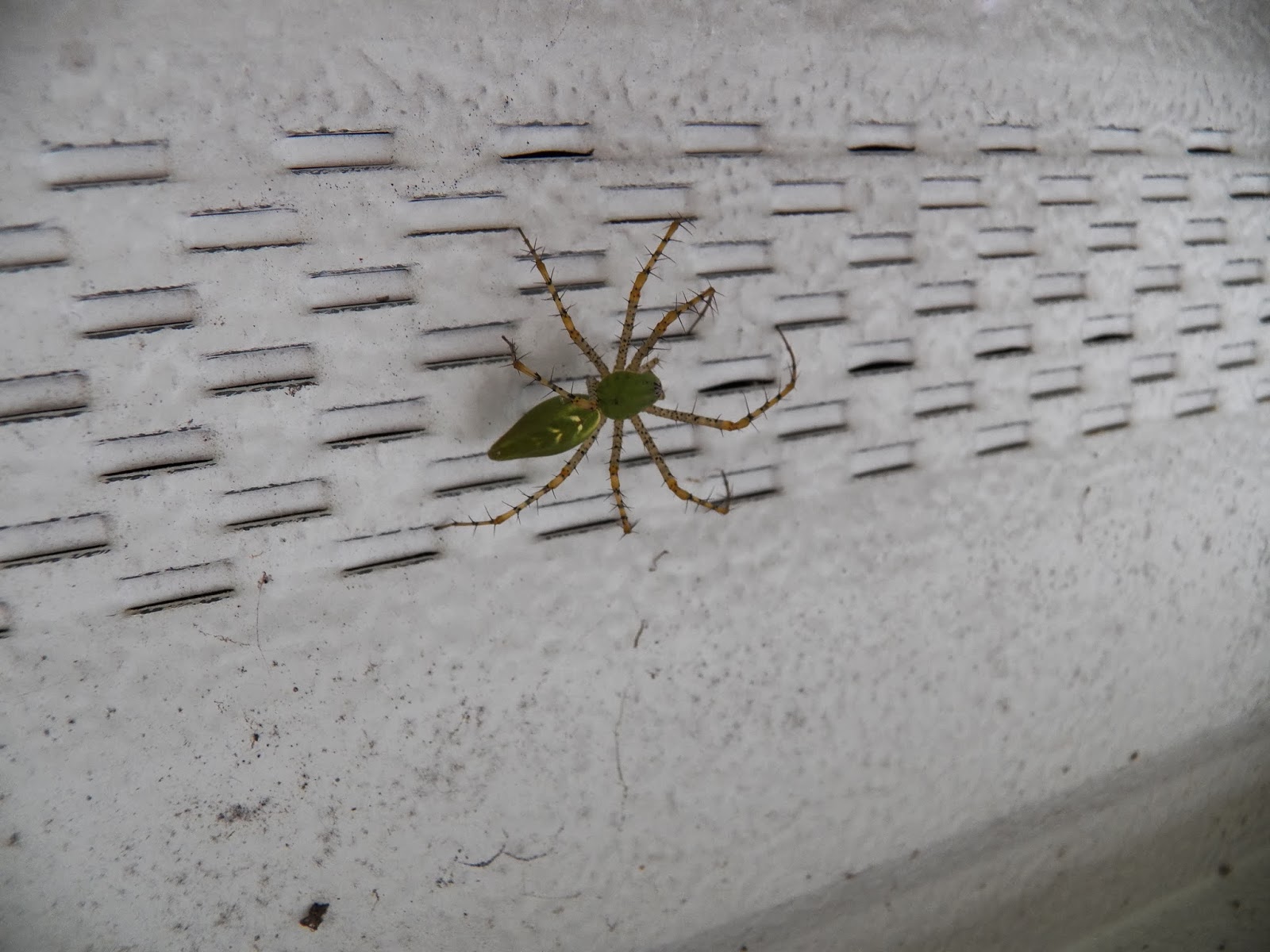
green lynx spider Peucetia viridans

green lynx spider Peucetia viridans

green lynx spider Peucetia viridans

southern house spider Kukulcania hibernalis

orchard orbweaver Leucauge venusta ?

unknown orbweaver

to be continued.......

Thursday, December 5, 2013

Florida-Busy Making Preps and Life in General

Well, I made it through the hot and humid Florida summer. This has been a typical subtropical winter with highs being in the hi 70's today. Water is NOT a problem here! There is so much of it coming down. We had one day where there was a rainfall of 4 inches in a little over 10 hours. With the right storage system a person could store a lot of water for the garden. Speaking of gardens, we have our winter crops in and new seeds are under the lights right this minute. I have been checking out the local fauna & flora. The variety of insects is incredible, especially the spiders. Of course there is the Florida state bird, the mosquito. I hate those things with a passion but I have seen a few of the local "insect repellent" plants such as dog fennel and beauty berry. I tried beauty berry leaves this summer and by darn, it works! As a plus the berries are edible and can be used for making jelly and have medicinal properties. We, my fiance Annie & I, are selling some local natural items in our eBay store as well as the usual stuff. Look on my eBay link at the top right column to see what we have if you're interested. This economy is getting very rough and we are barely making it but we work hard and by the Good Lords blessings we do OK. I am doing research and some things with yaupon holly, Ilex vomitoria. The famous "black drink" was made by the local Native Americans from it, and I plan on seeing if selling the leaves for tea is feasible. The yaupon has a caffeine content that is less than coffee or tea, but enough to satisfy any craving for caffeine. "Dry, unprocessed yaupon leaves contain between .65 percent and .85 percent caffeine by weight. Coffee beans are about 1.1 percent caffeine by weight and tea leaves about 3.5 percent caffeine," according to a University of Florida article. As a plus they are rich in certain vitamins and antioxidants. I can reach out the bedroom window and grab a handful of yaupon leaves, its that abundant down here. Kind of like sage brush out in good ole' Idaho. Worth a web search if you are interested. It was used in the 1800's and during the Civil War as a coffee and tea substitute and unlike some other substitutes, it stayed around for a while until coffee became more plentiful and cheaper. I've read where birds will eat the berries but only as a last ditch effort in late winter. They must be considered as a "starvation food" among our feathered friends. Also, the wood is very nice and has been used for turnings, inlay and carvings. I removed the biggest yaupon I have ever seen from our goose pen. It was 20+ feet tall and about 6 or more inches in diameter. I am cutting it into 3 foot sections and sealing the ends. We have an aviary that's not in use so I'll stash it in there till its dry enough to use and sell. I don't know how well it does as a green wood for carving and I've read that the holly's have a nasty habit of cracking and checking if it drys too fast. Here are some shots of the local yaupon bush's. I'll be posting more interesting stuff in the near future as time permits. Thanks everyone and enjoy the holidays!


Tuesday, July 2, 2013

Crazy weather, heat, wind and a forest fire

Wow! Its 109 degrees here in the Treasure Valley! We are having quite a heat wave here in the northwest. Working in the garden past 10AM is torture. Fortunately everything is in the ground and its just maintenance such as watering and weeding. Last night I watched a thunder storm roll in from the west over the Owyhee (pronounced OH-WHY-HE) mountains and the lightening show was terrific! I saw where a particularly bright bolt struck and a minute or so later I noticed an orange light. I thought someone was 4 wheeling up in the hills so I got out my Minolta 8x to 20x zoom binoculars and set them on the tripod. Sure enough the lightening had set a wild fire. In a matter of a few hours it had spread over several thousand acres. The wind was terrific and helped it along. Today the Snake river valley is full of smoke and I can't see across the valley to the Owyhee's.
This weather reminds me of several things: be hydrated constantly! After a few hours work outside I started to feel the effects of heat sickness so I got in the shade and downed a bottle of Gator Aid. I still drink plenty of water but when you sweat a lot you loose valuable minerals and need to replace those electrolytes. Sometimes I put 1/4 teaspoon of sea salt in a quart of nice cold water. It helps replace some electrolytes but its not as efficient as Gator Aid. My trusty bandana is always soaking wet and worn around my neck cowboy fashion. This of course gets my tee shirt soaked which helps with the cooling. And I always wear a booney style hat, doctors orders because of the skin cancer and its a great shade giver as well. When its this hot and you work outside you just have to make sure you are drinking plenty of water.
The wind was gusting at around 60-70 MPH last night and when I awoke at 5AM I noticed a lot of damage here on the farm. An old dead elm finally bit the bullet and laid down. Fortunately it didn't take anything with it. There is a huge cottonwood that has a lot of dead limbs and I'm afraid its going to come down soon. If so it will only block the road until we get it cut up and moved but God help the person who has the misfortune of being under it if it falls. Several pieces of equipment were blown over and some roof damage to a shed or two but nothing really serious from the wind storm. I think the heat really gets the wind speed up as it cools in the evening. I don't know all the mechanics of weather but I think I read about this particular phenomenon somewhere.
Take care everyone and stay safe! Drink plenty of water and stay hydrated if you are out in the hot summer weather.

Sunday, June 9, 2013

Nampa Parks & Recreation

Today there was a event put on by the Nampa Department of Parks & Recreation concerning the very fine trails and bike paths here. There were some things for the kids like a scavenger hunt and a raffle for a nice new bicycle. This kicks off the bicycling and walking week and on Saturday it all concludes with a bike race downtown. Earlier this morning I hit the trail heading west and saw a nice big slider sitting on the bank getting some sun. The rest of the photos are from the event that took place from 3-5PM today. There are some really great trails here and if you are into birdwatching, nature or just like to get out in the country check it out. Its worth the trip.


This is blown up version of the map that is currently available from Nampa Parks & Rec. The green lines are trails at present and the green dotted lines are future projects.

Heres the sunshade and table. The fellow in the green shirt was very helpful as were all the staff. This is also the parking area for trail users off of Sunnyridge Road

This is the Wilson Pathway trail headed west.

This is the creek next to the trail. Beautiful, isn't it?

Here's a shot of the Wilson Pathway trail headed east. The trail is paved for quite a ways and to the left of the black pavement. This will take you to the Wilson Springs ponds and the Anderson Wetlands. This is just off of Sunnyridge Road.
Here's Mr. slider doing what turtles do best.

Friday, November 18, 2011

A day at the river

I went to the river today and decided to take the camera. I just posted about this trail and thought pictures would be nice. It was very overcast so some pictures may be a little dark. Hard to believe its the middle of November and some plants are blooming and berries are still ripening. I love winters here. Enjoy the show!

A patch of horsetail equisetum. Famous for its high silica content.

A jungle of California grape Vitis californica. The trees are mostly valley oak.

See the tiny clams?

Better?

Macro setting. There are millions upon millions of these. I heard they are an invasive species.

American coots.


More American coots doing what coots do.

Curly dock or sorrel. Rumex crispus, common on the river banks. Also known as wild rhubarb because of its sour taste. This is because of the high oxalic acid content just like rhubarb. Rhubarb is related to the docks.

Late season elderberries. Sambucus mexicana. There are even new flowers blooming.


A common sight on the trail.

Smart weed, knot weed, bistort, ladys thumb print, etc. Polygonum sp. The plant and seeds were used for food by Native Americans.


Polygonum sp. Nice shot of the flowers. Pinkish ones are oldest.

Polygonum sp. Note the dark mark on the leaves. This is where ladys thumb print comes from.

A month ago this was all water. It doesn't take long for the plants to take over. This is mostly knot weed and cockle burr.


Mint, species unknown. very pungent!

Mint close up.

Mistletoe infesting cottonwood trees. These can kill a healthy tree as well as cause limb breakage.

Same as above from a little farther away.

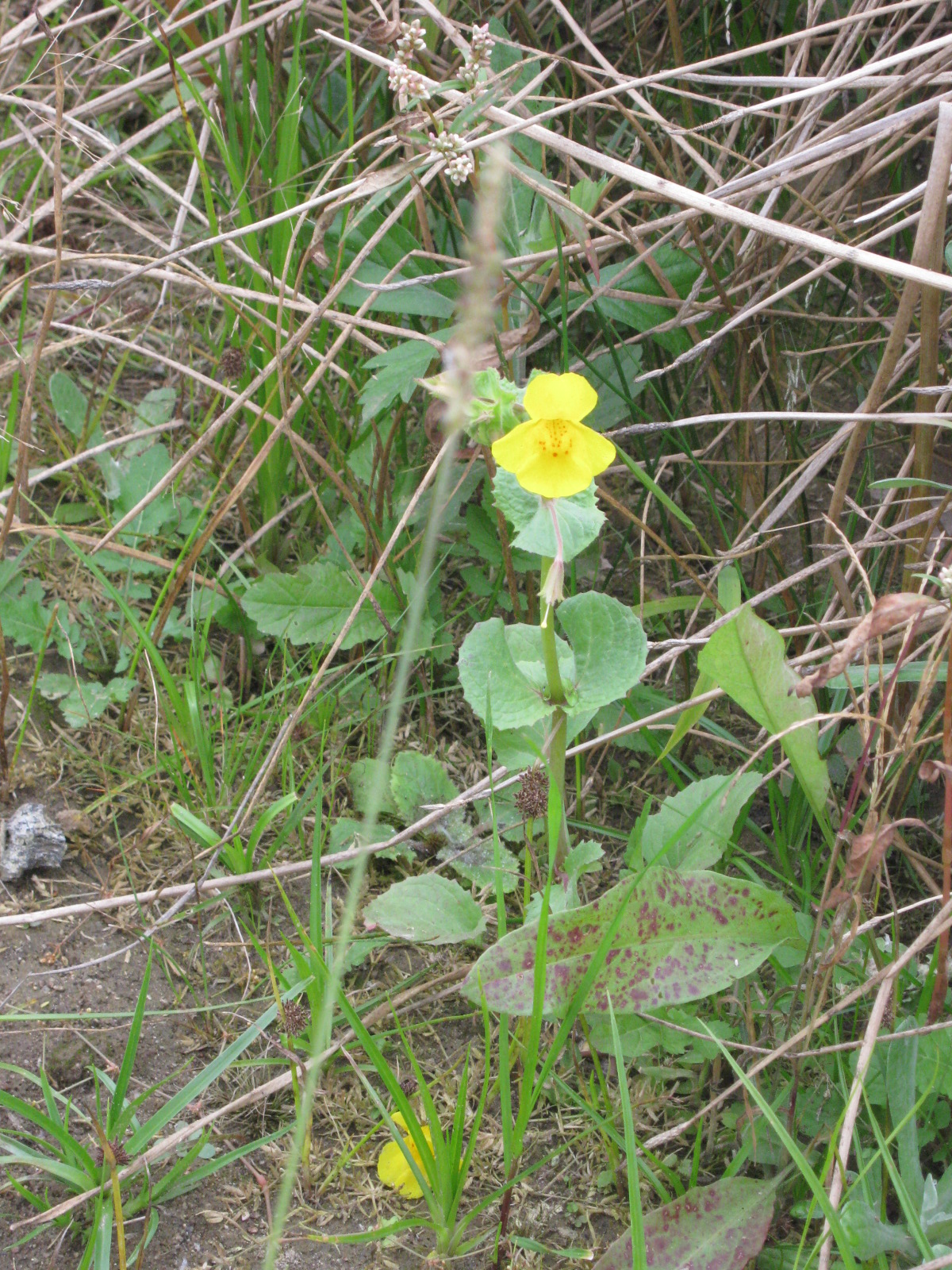
Monkey flower in bloom. Mimulus guttatus.

Monkey flower from top side.

Monkey flower side view.

A nice stand of stinging nettles. Urtica dioica. I harvested quite a bit of nettle this year. Plants are in the 8 to 12 foot range. Incredible! Lots of good cordage.

Pennyroyal, Mentha pulegium. A very pungent member of the mint family and an invasive species.


Pennyroyal.

Pennyroyal. The bees love to hit this plant.

Sow thistle, Sonchus asper, with curly dock. The sow thistle is the plant with yellow flowers. The larger leaves at the bottom of the plant are edible but contain bitter properties. Its an invasive species.

Heres a shot looking east. The river is back to about 1/4 capacity. With more rain in the Sierra's it may get back to full capacity.

A view towards the west. The main channel is on the other side in the distance.

This is the dirt part of the trail. The paved section is on top the berm to the right.

Cliff swallow nests under a bridge.


Tree tobacco, Nicotiana glauca. An extremely toxic invasive species. The leaves can be boiled for an hour and added to a biodegradable detergent. This mixture makes an excellent natural bug killer and repellent for the garden. Don't get any on your skin!

Close up of tree tobacco flowers


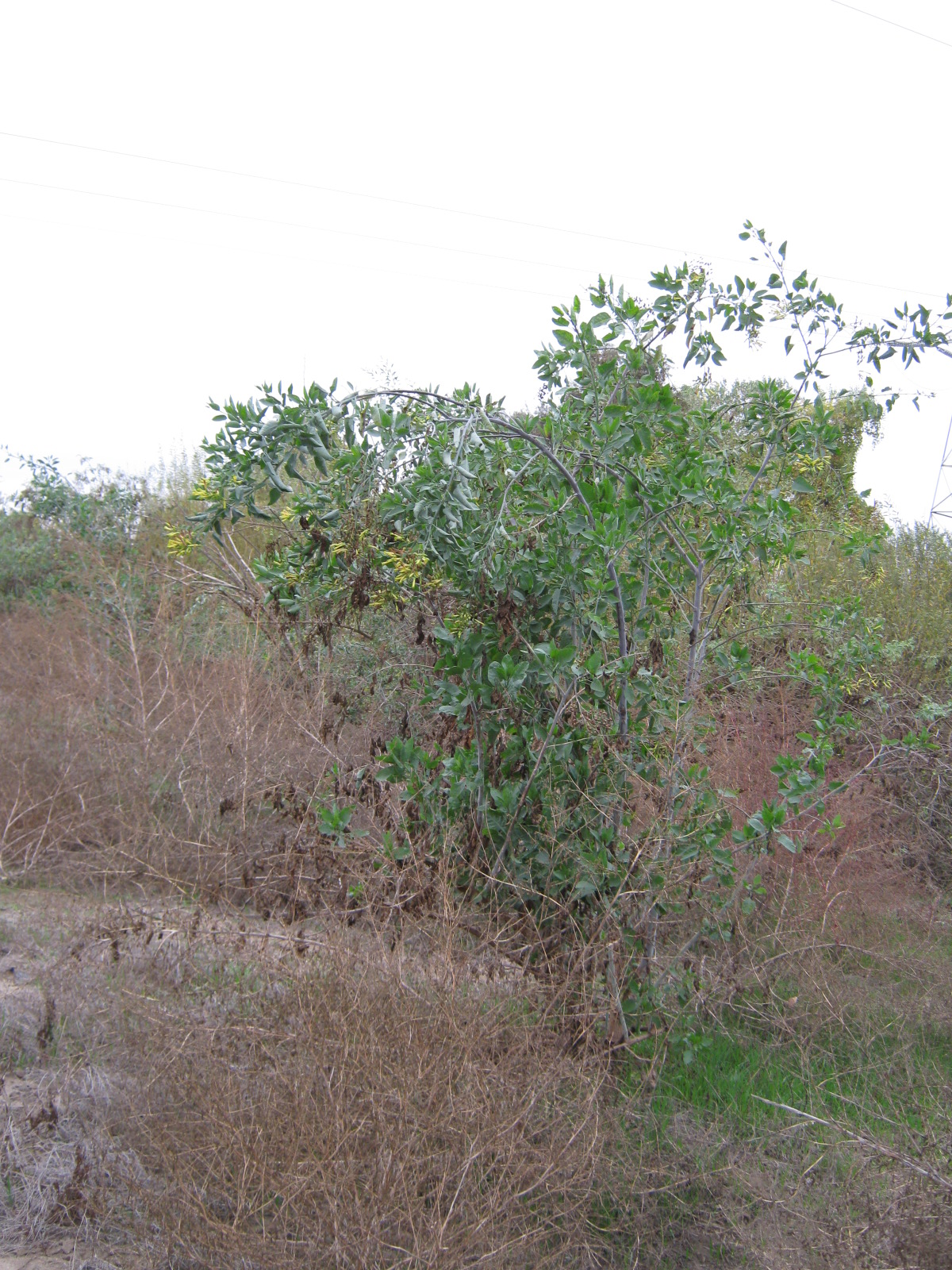
Tree tobacco. The bent over look is an identification feature as well as the green trunk and distinctive color of the leaves. Its very poisonous (very high nicotine content) and should not be used as a tobacco substitute.

A wild bee hive at the base of this bent over oak. I watched these little ones for quite a while. They are still gathering from the plants that are still flowering. November honey. Who would imagine?