Rons Primitive Skills

Custom Search

Search This Blog

Monday, November 28, 2011

Paleo stone micro drill

I was showing some antler needles I made on a forum and one guy asked how I drilled the holes. I told him of a quartz micro drill I made. I can't find it for the life of me and the last I saw it was several years ago. The drill was a long, slender sliver that came off a huge crystal I was taking spalls from. I bought the crystal very cheap because it was dropped and the tip pulverized. I mounted the sliver in a piece of bamboo chop stick after flaking a good edge on both sides. I use a deer antler tine for this kind of flaking because I can keep the tip of the antler ground very small to a wedge shape. I retouch the edge as I work to keep a good clean working tip. The quartz drill was just under 1/4" total length and about 3/16" protruded from the end of the chop stick. The short piece of chop stick with stone tip was mounted into a larger diameter handle and twirled like a fire hand drill.

I made the drill in the photos from a piece of  debitage an archaeologist friend had given me. He collected several bags from the surface of an ancient village site that was being built on. I don't know if the archaeologists ever did anything at this site before all the building took place. He was kind enough to give me several bags. This stuff is wonderful to knap and I wouldn't doubt it was heat treated by the ancient artist who made tools from the rock.

I plan to make a bow drill using this set up. I saw one on BushcraftUK a few years back and the maker did a wonderful job. Its the last picture. I did a screen capture from the original article but I can't find it on the site any longer.

Here's the finished drill. Almost 1/4" long OAL.

The shaft after taking out the notch. I used a very thin flake and made two splits and used a pointed end to cut into the base of the notch section to be removed. Then pinched the stick together and used a bit thicker flake to push the notch out of the side till it broke clean. The indents in the sides are for the sinew to get a good hold. The bamboo chop stick is whittled down to about 3/16" diameter.

Here's the drill mounted and waiting for sinew and hide glue. My hide glue is made of an old elk hoof and a few scraps of rawhide chew toy, I use a piece about the size of a nickel and had plenty left over. I use dried flakes and pieces and reconstitute with hot water.

All finished. The sinew is deer leg sinew and the hide glue is smeared over it as well as in the notch. I left this one full length, about 12" and twirl it like a fire drill. It needs to be cut off and mounted in something a little thicker for better control.
Someone at BushcraftUK made this a few years back. Admirable work and I like his set up for doing antler needle eyes. He uses twigs set in the cracks in the log to hold the antler steady. Great idea!

Monday, November 21, 2011

Castor oil plant-Bad beans

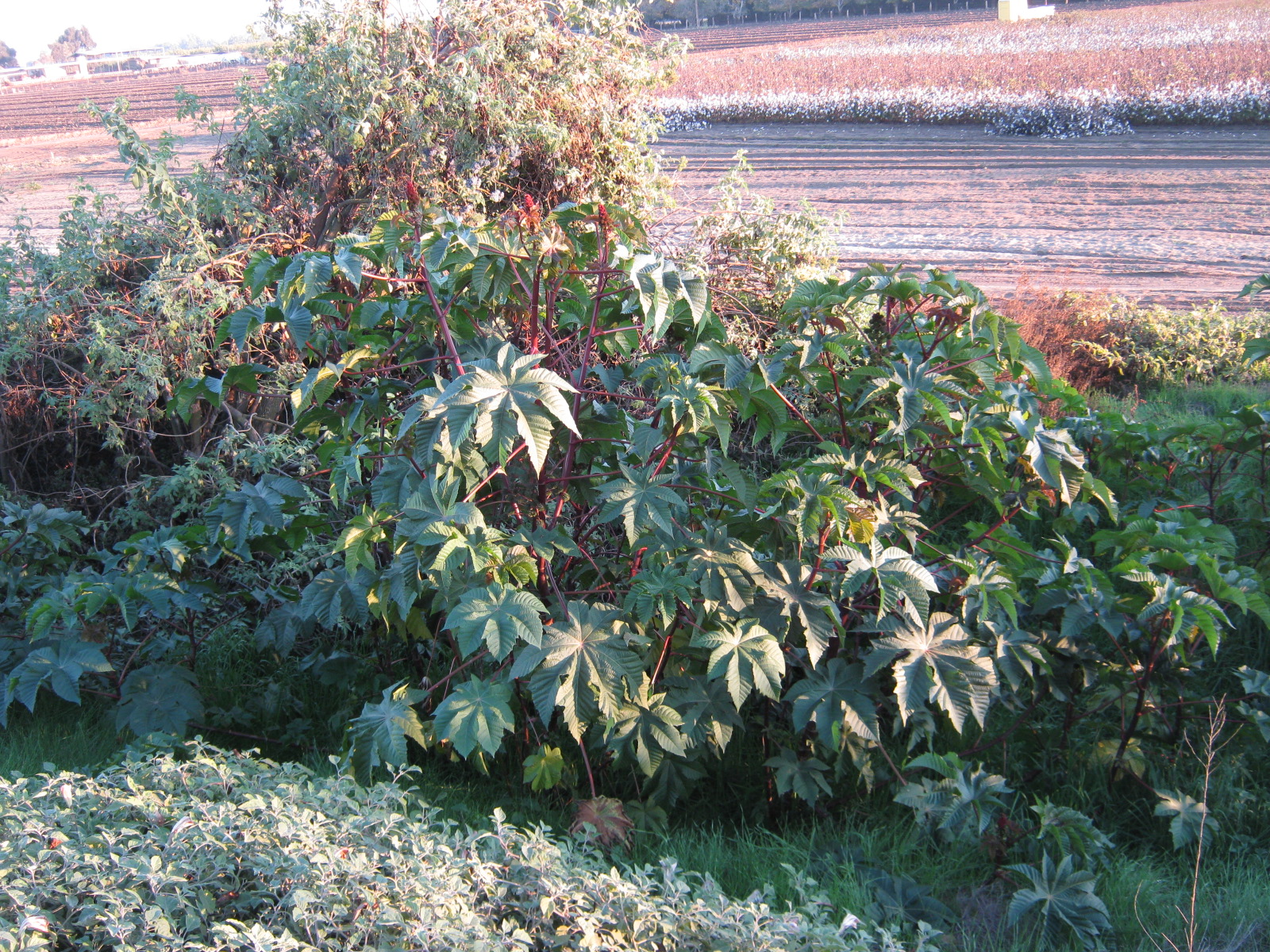
I was on my favorite trail today. I always see or discover something new when I hike it. Today I went along the river and found a big patch of Castor, Ricinus communis. This plant is now a well established invader. Originally from the Ethiopia region of tropical west Africa, this escapee has taken root and can be found in any well drained soil near water courses throughout the west. It came here as a decorative outdoors ornamental. The seeds are the source of castor oil which is used in a lot of different chemical manufacturing process's. For instance, Castrol motor oil contains castor oil. As well as a lot of different lubricants, medicines, etc. Castor "beans" are not beans at all but just big seeds. They also contain the deadliest plant poison known to man:ricin. Ricin was in the news lately. A group of old guys were going to use it to get rid of some government agents. Crazy old coots. Its also been used for chemical warfare. Nasty stuff. An amount equal to a grain of salt will kill an adult. The seeds are beautiful but deadly. A small child eating just one will probably die. An adult will die if they eat two or more. The seeds have been ground up and mixed with bait to kill rodents. And, from what I've read, there aren't any insect pests that bother castor plants or seeds. If your interested in learning more about this amazing plant, go to:
http://waynesword.palomar.edu/plmar99.htm
and: http://en.wikipedia.org/wiki/Castor_oil_plant

I can see a danger in some unknowing person thinking the pretty seeds would probably be good to eat. It would be their last bowl of beans. Nothing surprises me any more. I once asked a friend in Tucson what he was going to do with a big bag of coral beans and he said he thought he read some where that they were good to eat. Bad idea. They are another very toxic seed. His mother had gathered them years before to make rosary necklaces, a popular use for them. My advice is to research any and every plant you find. Never take a risk. When one or two seeds can kill you, its worth the time and effort. After all, you may find out some incredible things about the amazing plants around us.

A nice big, showy ornamental. At the top of the plant are the red flower panicle's.

That's a seed cluster under the leaves in the middle.


Seed pods just ripening.

Notice the pods are divided into threes. Three seeds to each pod.

A shot of a complete cluster.

Pretty, aren't they? Like the human finger print, no two seeds have the same pattern. Each is unique.

Saturday, November 19, 2011

Gorilla warfare or what the USPS does to packages.

I just got home and the mail man left a book I ordered from Paperback Swap. I was stunned. This isn't the first time its happened and its been a lot more than books. I had a box arrive empty with the side missing. They marked it confirmed delivery and left it at my door step. That was a hard one to work out with the company that sent me the product. Other packages have arrived looking like they went through a 5 year Euro soccer fest. Come on, guys, aint we paying you enough? I know a lot of fellow vets who work for the USPS and tell horror stories about the crappy conditions and rotten supervision at some places, but these are things people spent good money and time on. Be careful, huh?

What happened?

Anger management, maybe?

"slight damage to the packageing. everythings ok, carry on......."


Might be a little rough to read.

This happened before. At least this is only a quarter way through the book.

Friday, November 18, 2011

A day at the river

I went to the river today and decided to take the camera. I just posted about this trail and thought pictures would be nice. It was very overcast so some pictures may be a little dark. Hard to believe its the middle of November and some plants are blooming and berries are still ripening. I love winters here. Enjoy the show!

A patch of horsetail equisetum. Famous for its high silica content.

A jungle of California grape Vitis californica. The trees are mostly valley oak.

See the tiny clams?

Better?

Macro setting. There are millions upon millions of these. I heard they are an invasive species.

American coots.


More American coots doing what coots do.

Curly dock or sorrel. Rumex crispus, common on the river banks. Also known as wild rhubarb because of its sour taste. This is because of the high oxalic acid content just like rhubarb. Rhubarb is related to the docks.

Late season elderberries. Sambucus mexicana. There are even new flowers blooming.


A common sight on the trail.

Smart weed, knot weed, bistort, ladys thumb print, etc. Polygonum sp. The plant and seeds were used for food by Native Americans.


Polygonum sp. Nice shot of the flowers. Pinkish ones are oldest.

Polygonum sp. Note the dark mark on the leaves. This is where ladys thumb print comes from.

A month ago this was all water. It doesn't take long for the plants to take over. This is mostly knot weed and cockle burr.


Mint, species unknown. very pungent!

Mint close up.

Mistletoe infesting cottonwood trees. These can kill a healthy tree as well as cause limb breakage.

Same as above from a little farther away.

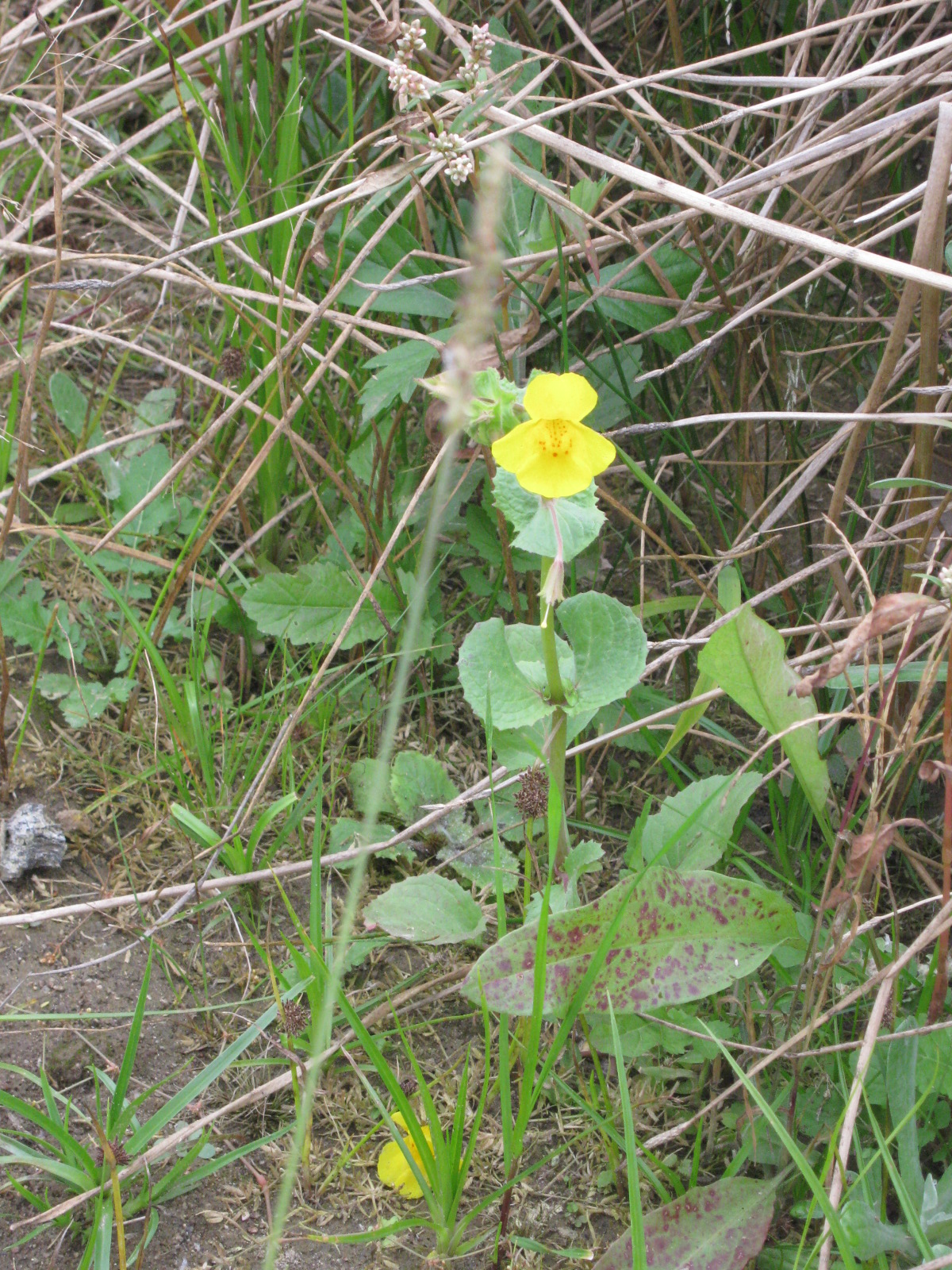
Monkey flower in bloom. Mimulus guttatus.

Monkey flower from top side.

Monkey flower side view.

A nice stand of stinging nettles. Urtica dioica. I harvested quite a bit of nettle this year. Plants are in the 8 to 12 foot range. Incredible! Lots of good cordage.

Pennyroyal, Mentha pulegium. A very pungent member of the mint family and an invasive species.


Pennyroyal.

Pennyroyal. The bees love to hit this plant.

Sow thistle, Sonchus asper, with curly dock. The sow thistle is the plant with yellow flowers. The larger leaves at the bottom of the plant are edible but contain bitter properties. Its an invasive species.

Heres a shot looking east. The river is back to about 1/4 capacity. With more rain in the Sierra's it may get back to full capacity.

A view towards the west. The main channel is on the other side in the distance.

This is the dirt part of the trail. The paved section is on top the berm to the right.

Cliff swallow nests under a bridge.


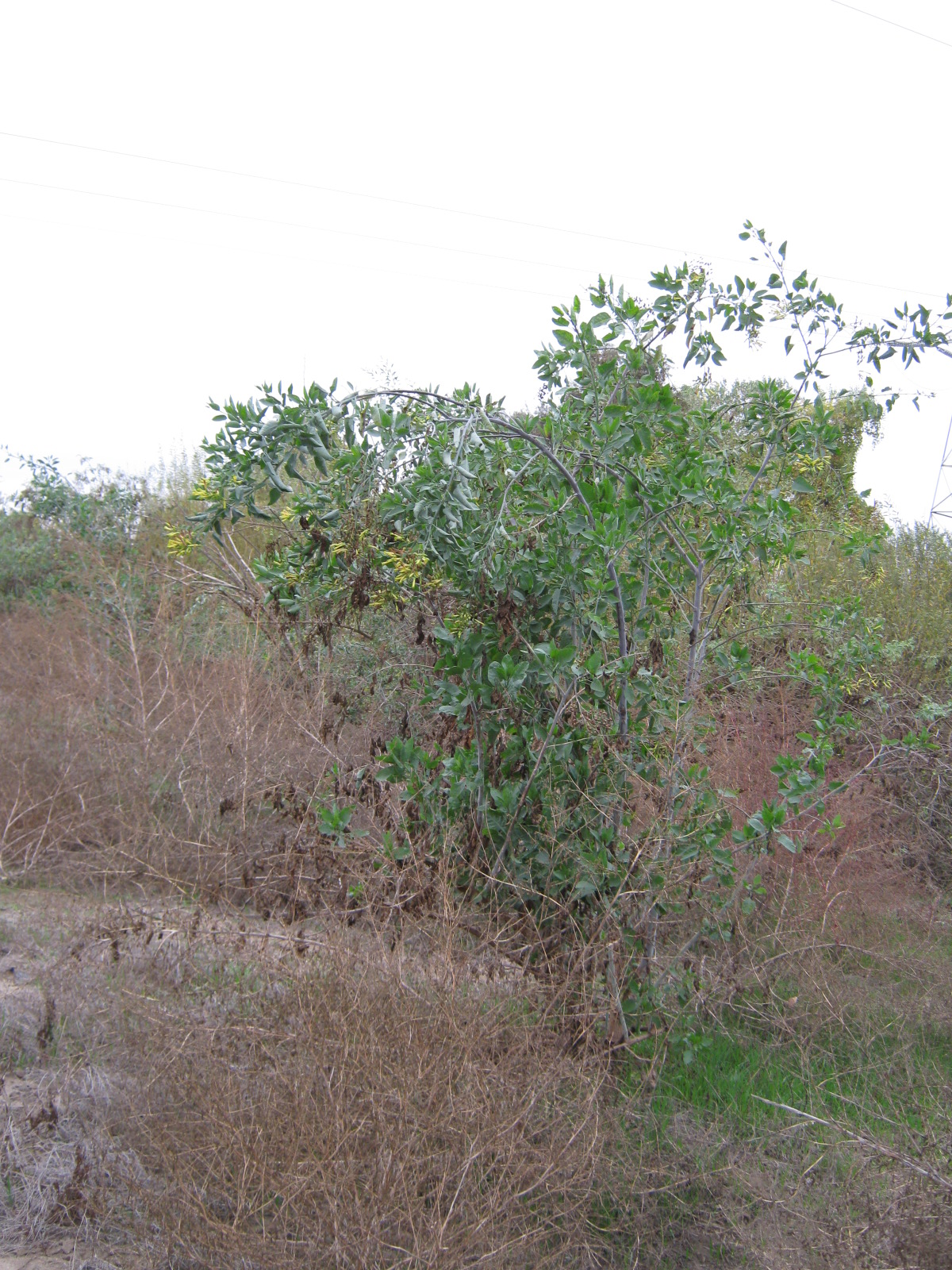
Tree tobacco, Nicotiana glauca. An extremely toxic invasive species. The leaves can be boiled for an hour and added to a biodegradable detergent. This mixture makes an excellent natural bug killer and repellent for the garden. Don't get any on your skin!

Close up of tree tobacco flowers


Tree tobacco. The bent over look is an identification feature as well as the green trunk and distinctive color of the leaves. Its very poisonous (very high nicotine content) and should not be used as a tobacco substitute.

A wild bee hive at the base of this bent over oak. I watched these little ones for quite a while. They are still gathering from the plants that are still flowering. November honey. Who would imagine?