Rons Primitive Skills

Custom Search

Search This Blog

Saturday, December 17, 2011

Side hafted microblade

After seeing these on Elfshots blog http://elfshotgallery.blogspot.com/2010/02/palaeoeskimo-side-hafted-microblades.html I decided I had to make one. It was surprisingly easy, kind of like a Hoko knife. With modern tools (my Warren carving knife with a straight blade and a tiny gouge) it went quick, less than an hour. With stone tools and depending on experience it probably took the old ones maybe an hour or less. I used artificial sinew split up into many strands and no glue. The original article doesnt state if glue was found on the preserved artifacts and I really don't think hide glue was all that common on the Arctic and sub Arctic coastal areas. Tim Rast, the owner of Eflshot is a professional archaeologist and maker of things ancient. He has made a bunch of these out of wood, antler, and bone. Please take the time to peruse his site for the many excellent articles on Eskimo and related cultures and their artifacts.

This shows the groove where the blade sets.


Here's a shot of the handle with two notches for the cordage. I used cottonwood for this knife.
This shot shows the brace which is held snug against the blade when tied in place at the two notches on top..
This shows the notch in the brace which sets against the blade.
Here's the blade. I made it from a piece of flint I found in Colorado.
This shows everything set up ready to finish.
This is the completed knife. Overall length is 5 inches.
Closeup of the finished knife. Stone, wood, sinew-a simple but efficient tool.

Sunday, December 11, 2011

Cattail arrow shafts

Today I harvested five nice cattail, Typha latifolia stalks. They were just ripe for the picking since all the leaves were about dead and turning brown, These should dry out soon and then the fun begins. I like to use cattail because they are light and most times need little "tuning", such as straightening. Cattail arrows are really easy to make and being light they shoot at a fairly flat trajectory from my bow which is a 35 pound pull. I keep my arrows at 30" length more or less. I have a 28" draw so this size works best.
First thing I did was strip most of the excess junk off the shafts and now I have them bundled, butt to nose, so it makes an even bundle. This bundle will set on my book case to dry. It should only be a few weeks since its warm and dry in my home. When they are dry I'll post a DIT article on arrow making. I use my own stone points and try to use found feathers.
Heres a link to a wealth of material on cattail arrow making at Paleo Planet:http://paleoplanet69529.yuku.com/search/text/?q=cattail+arrows&orderby=created_at&forum=&submit=Search+Forum#.TuWPOOyCmuI
Heres a shot of the bundle, well over 3 feet in length so I have room to trim.

Wednesday, December 7, 2011

Tinder gathering

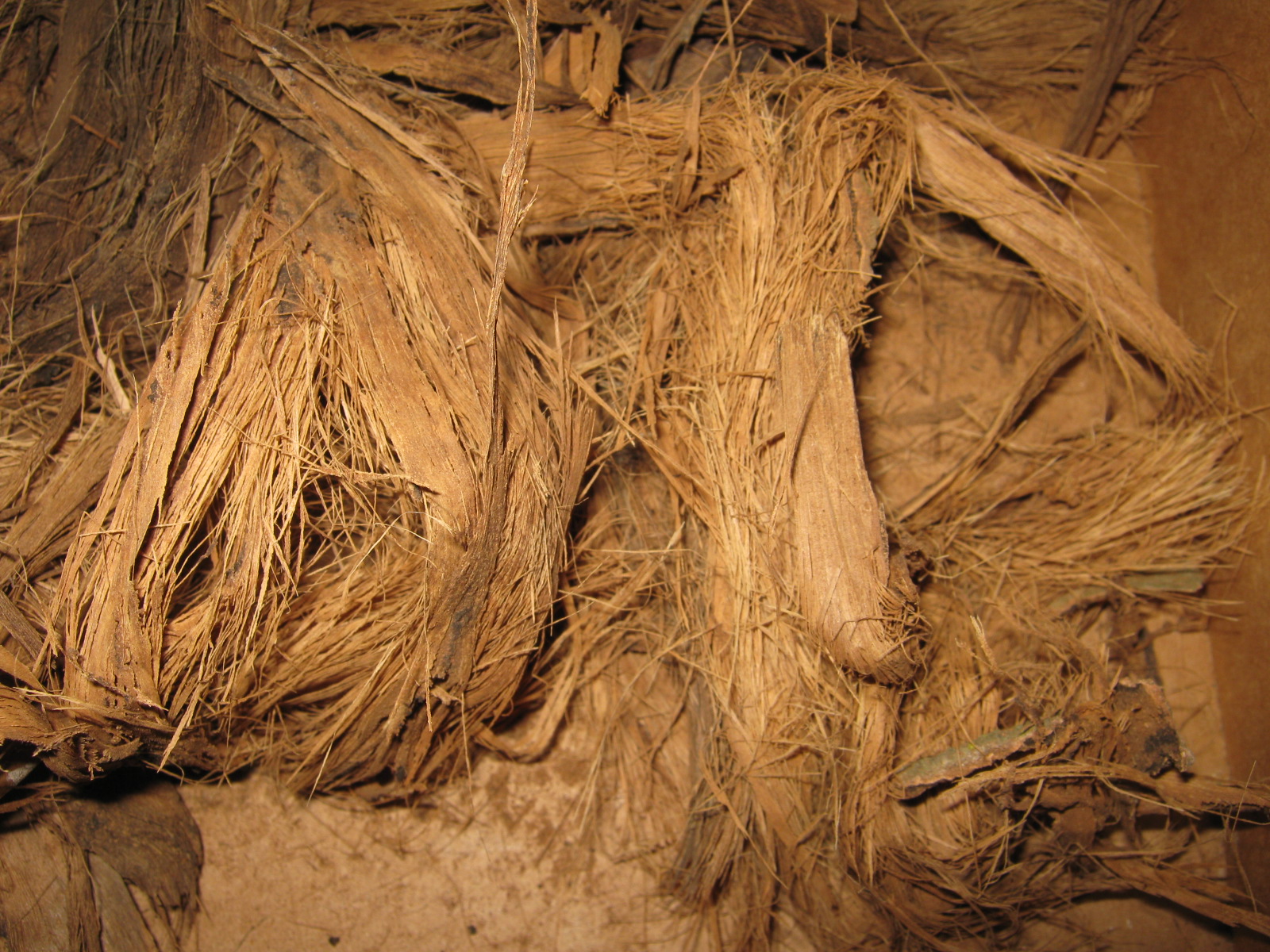
I was out by the St Johns river the other day and finally got around to gathering some cottonwood inner bark. This is from a dead standing tree. Even still, its moist because of all the dew and frost lately. I spread it out in a soda flat to dry next to the fireplace. This stuff is great for flint and steel with char cloth. It takes flame quickly. I shred it fine and I hear if you powder it you can get a glowing coal from a ferro cerium rod. Some folks have made cordage from the live inner bark. I can see how that would work, this stuff being so fibrous. Carvers look for the thick bark, 2-6" thick, for carving material. A small chunk of bark makes a very good hand hold for bow drill fire making. I have one that is at least 10 years old and has no wear but a nice shiny polish where the spindle fits.
I like to store up nice, dry tinder for my trips into the boonies. I have those little snack size zip locks with birch bark, cottonwood inner bark, cedar/juniper inner bark, and some other natural tinders I've gathered. I throw two or three of these into my pack and no matter what the conditions, I have dry tinder.


Another tinder I gathered at the same place is a half dozen shelf fungus from a dead cottonwood log. These are polypore fungus but I don't know what species. I've been told they are good for catching spark. I can't wait till they are bone dry and I can experiment. They were dead and dry when I found them but they still have some moisture from the damp weather. They, too, are drying by the fireplace. I'll post my results with this experiment and any further information I discover.